Is Laughing Gas Safe for Kids at the Dentist?
You’ve been told your child needs a filling, and someone mentioned laughing gas. Now you’re wondering whether it’s actually safe, what it does to a small body, and whether you should agree to it. The question is reasonable and one we hear from parents almost daily. Nitrous oxide has a longer track record in dentistry than almost any other medication, but a long history doesn’t automatically answer the specific questions you have about your specific child.
Quick answer: Yes. Nitrous oxide has been used safely in pediatric dentistry for over a century and is the most studied form of sedation in children. It wears off within minutes of removing the mask, doesn’t require IV access, and has a low rate of side effects. Major pediatric and dental societies endorse its use when administered by trained providers.
How laughing gas works in the body
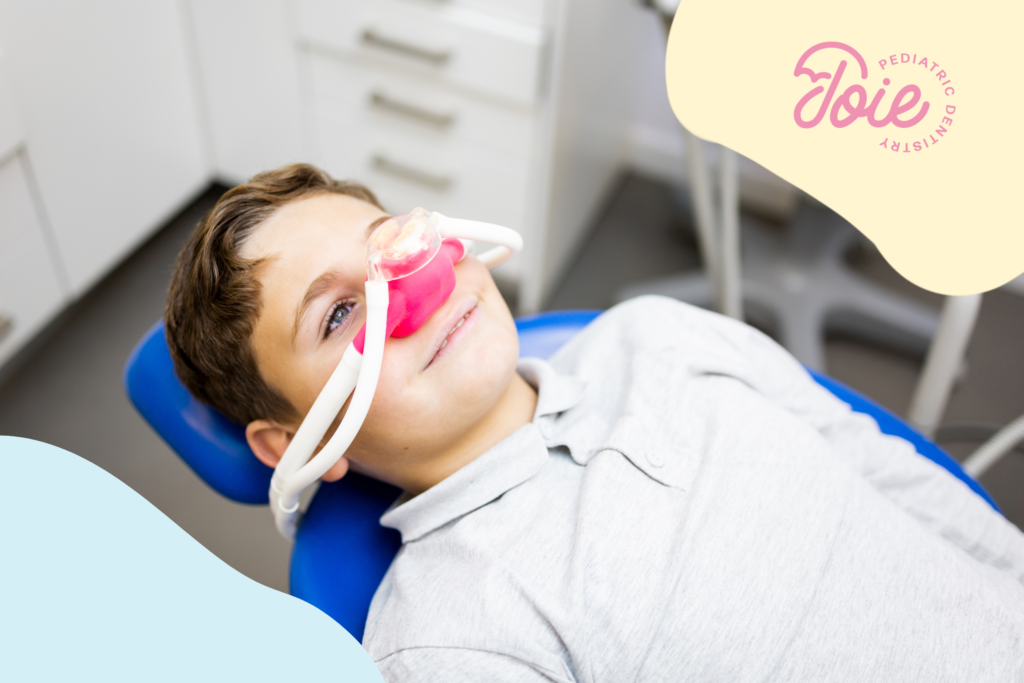
Nitrous oxide is a colorless gas that your child breathes in through a small mask placed over the nose. It’s mixed with oxygen, usually at concentrations between 30 and 50 percent. Within two to three minutes, it produces a light, floaty feeling and reduces anxiety without putting the child to sleep. Your child stays awake, can talk, and can respond to instructions throughout the entire appointment. The gas isn’t metabolized by the liver or kidneys, which is part of what makes it so predictable. Once the mask comes off and your child breathes regular air for about five minutes, the effect is fully gone.
The safety record in pediatric dentistry
Nitrous oxide has been used in dental settings since the mid-1800s, and modern delivery systems have built-in fail-safes that prevent the concentration from going too high. Recent pediatric studies put the rate of significant adverse events well below one percent, with the most common side effect being mild nausea, usually in children who ate a heavy meal beforehand. A pediatric review of nitrous oxide for procedural sedation describes a strong safety profile in children when the gas is delivered with continuous oxygen monitoring by trained providers. For most children, the most uncomfortable part of the appointment is getting used to the mask itself, not the gas inside it.
What your child actually feels
Most children describe the feeling as warm, tingly, or floaty. Some say their hands feel heavy or that the room sounds slightly far away. They stay aware of what’s happening but care about it less. They can hear us, answer questions, and follow simple directions like open wider or close your eyes for a second. A few children get giggly, which is where the name comes from. A small minority don’t like the sensation and ask to take the mask off, in which case the effect reverses within minutes and we move forward without it. Parents are welcome to stay in the room throughout the appointment and will see a child who looks calm but fully alert, often chatty in a slow, easy way.
When nitrous oxide makes sense for a child
Not every appointment needs sedation, and not every anxious child needs nitrous oxide. We typically suggest it for fillings, extractions, and longer treatments where staying still matters, especially when a child is moderately anxious or has a strong gag reflex. It’s also useful for children who’ve had a difficult dental experience in the past and need a smoother re-entry. We don’t recommend it for routine cleanings in children who are already comfortable, or for children with certain respiratory conditions. Our full range of sedation options for children includes nitrous oxide and other approaches when a deeper level of sedation is appropriate.
Preparing your child for an appointment with sedation
A light meal two hours before, nothing heavy, and skip dairy in the hour leading up to the appointment to reduce the chance of nausea. Dress your child in loose, comfortable clothing. Bring a stuffed animal or small comfort item. Talk about the appointment honestly using simple words, calling the mask a balloon for the nose or a space mask, rather than overpromising that nothing will feel different. After the appointment, your child can usually return to normal activities within an hour. The first visit is also a good time to ask whether nitrous oxide might be helpful for any future treatments.
Let’s Make Your First Visit Easy
Whether you’re from Ramsey, Mahwah, Allendale, or anywhere in Bergen County, we’d love to welcome your family to ours.
SHOWTIMES (HOURS)
Monday: 9:00 AM – 5:00 PM
Tuesday: 9:00 AM – 5:00 PM
Wednesday: 9:00 AM – 5:00 PM
Thursday: 9:00 AM – 5:00 PM
Friday: 9:00 AM – 5:00 PM
Sat/Sun: Closed