Sensory-Friendly Dentistry: What It Means for Your Child
You’ve called pediatric dentists in the past, and the first question they ask is whether your child can sit still for an exam. The answer, honestly, depends on the day. For children with autism, ADHD, sensory processing differences, or a nervous system that simply runs hotter than average, a standard dental office can be too much: bright overhead lights, the buzzing suction, the unfamiliar smells, the chair that tilts back without warning. Sensory-friendly dentistry is about removing as many of those triggers as possible before they happen.
Quick answer: Sensory-friendly dentistry adapts the dental environment, pace, and communication to children whose nervous system processes sensory input differently. This typically means dimmer lights, softer sound, weighted blankets, no surprise movements, and longer appointment times. Research shows these adaptations measurably reduce stress markers in autistic children during dental cleanings.
What sensory-friendly actually changes about the visit
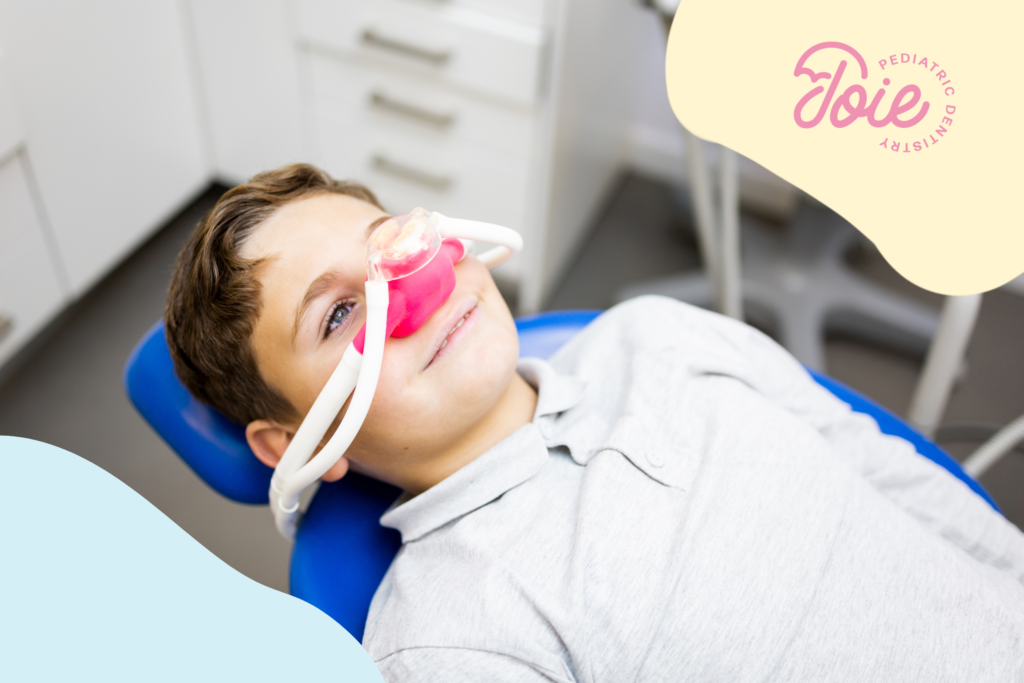
The standard dental setup is built for adult patients who tune out background sensory input. Children with sensory differences can’t always do that, and the room itself becomes the obstacle. In a sensory-adapted visit, overhead exam lights are dimmed or replaced with focused task lighting. The suction tool is paused often or swapped for a quieter version. A weighted blanket gives steady pressure that calms many children, especially those who seek deep input. We narrate every step before doing it. We use the same words each visit so the language becomes familiar. Appointments are scheduled at quieter times of the day so the waiting room is calm too.
Children who benefit most from this approach
Autism is the most common reason families seek a sensory-adapted visit, but the benefit is broader. Children with ADHD often struggle with the long stillness a dental exam requires. Children with sensory processing disorder may be over-responsive (every touch feels too strong) or under-responsive (touch barely registers, but the accumulation of inputs still overwhelms). Children with anxiety unrelated to a diagnosis benefit too, especially after a difficult dental experience. In a recent crossover trial, autistic children in a sensory-adapted environment showed measurably lower stress markers and fewer distress behaviors during dental cleanings compared with a regular environment.
Why preparation at home makes the bigger difference
What happens in our office matters less than what parents can do in the two weeks before the appointment. Read books or watch short videos about dental visits, even if your child has been through one before. Practice opening the mouth wide for ten seconds, working up to thirty. Touch your child’s gums with a finger or a clean toothbrush so the sensation isn’t new. Visit our office in advance with no exam planned, just to walk through the space and meet the person who will check the teeth. Most children settle into the chair faster when the room and the people are already familiar. The repetition is what builds tolerance, not the words.
The desensitization visit
For children who need more time, we book a separate appointment with no medical purpose at all. The child sits in the chair, gets to push the buttons, watches the light go on and off, holds the small mirror, and leaves. No instruments touch their mouth. The next visit might add one step, like opening for a count of five. The visit after that adds another. Building tolerance this way is slower in the short term and faster in the long term, because the child arrives at the actual exam already familiar with most of what’s happening. Our special needs pediatric dentistry appointments are built around this approach.
What you can ask for at any pediatric office
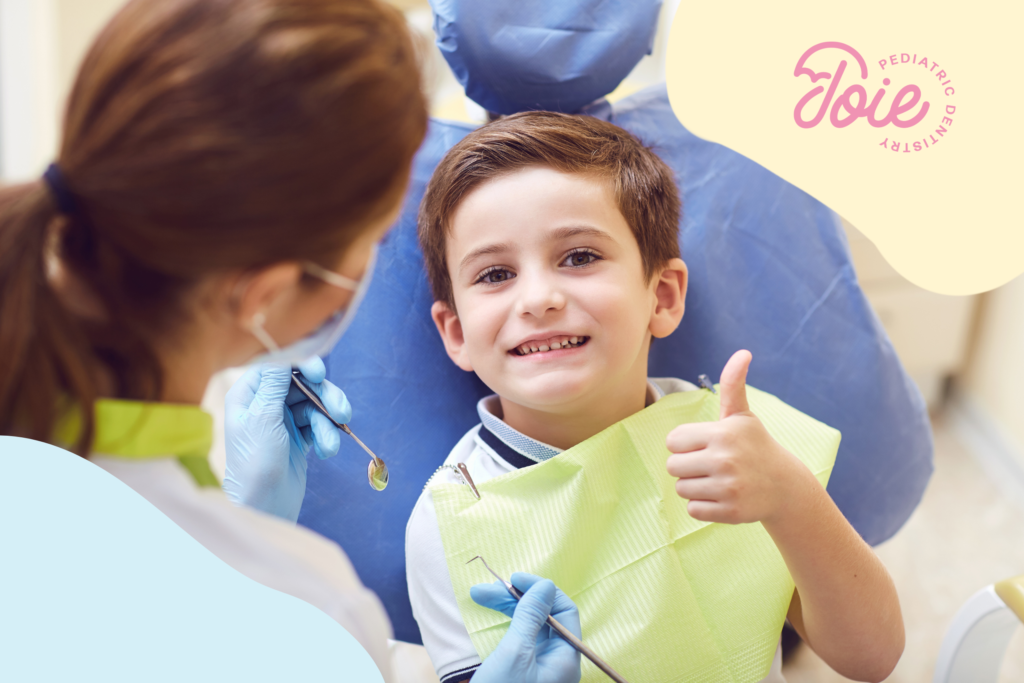
Before any first appointment, call the office and tell them what your child needs. Ask if you can come in for a tour first. Ask whether they can dim the lights or skip the chair tilt. Ask if you can stay in the operatory the whole time. Ask whether they have noise-cancelling headphones available or are comfortable with you bringing your own. None of this is unusual to ask, and a pediatric office that hesitates to accommodate is probably not the right office for your child. Booking the first visit is the moment to bring all of it up, even if it feels like a lot to spell out before you’ve met us.
Let’s Make Your First Visit Easy
Whether you’re from Ramsey, Mahwah, Allendale, or anywhere in Bergen County, we’d love to welcome your family to ours.
SHOWTIMES (HOURS)
Monday: 9:00 AM – 5:00 PM
Tuesday: 9:00 AM – 5:00 PM
Wednesday: 9:00 AM – 5:00 PM
Thursday: 9:00 AM – 5:00 PM
Friday: 9:00 AM – 5:00 PM
Sat/Sun: Closed