When Should Kids Start Flossing? A Guide for Parents
Flossing matters for kids as soon as two of their teeth touch, which is earlier than most parents expect. Until then a toothbrush reaches every surface, but once teeth sit side by side, the brush can’t get between them, and that’s exactly where cavities tend to start in children. Here’s when to begin, who does the flossing at each age, and how to make it something your child accepts rather than fights.
Quick answer: Start flossing your child’s teeth as soon as two teeth touch, often around age 2 to 3. Parents do the flossing at first; most kids can’t do it well on their own until around age 10. Floss once a day, ideally at night. The goal early on is building the habit, not perfect technique.
Why brushing stops being enough once teeth touch
A toothbrush cleans the front, back, and chewing surfaces of a tooth, but it can’t reach the two surfaces where neighboring teeth press against each other. While your child’s teeth still have gaps between them, that doesn’t matter, because the brush gets everywhere. The moment two teeth sit flush against each other, those touching surfaces become a sheltered spot where food and plaque collect and the brush can’t follow. Each tooth has five surfaces, and skipping flossing leaves two of them uncleaned on every touching tooth. Over days and weeks, that’s where plaque hardens and decay gets a foothold. This is why dentists count flossing as half of a child’s home care, not an optional extra once the teeth are in contact.
The age flossing should begin
There’s no fixed birthday for starting to floss. The trigger is contact between teeth, not age. For most children the first teeth to touch appear around two to three years old, often the back molars, so that’s when flossing usually enters the routine. Some children have spaced-out teeth well past age three and need flossing later; others have tight contacts earlier. The rule is simple: wherever two teeth touch, that gap gets flossed. You don’t need to floss a mouth full of well-spaced baby teeth, but as soon as the gaps close in any spot, that spot needs daily attention. If you’re not sure whether your child’s teeth are touching yet, slide a piece of floss between them. If it meets resistance and has to be eased through, the contact is there.
Who does the flossing, and when kids take over
Flossing is a parent’s job at first, and for longer than most families expect. Young children don’t have the hand coordination to guide floss between teeth and curve it against each surface, so a toddler or preschooler holding floss is playing, not cleaning. You do the actual flossing through the early years, gradually letting your child try as they get older. Most kids are ready to take it over on their own around age ten or eleven, when their hands can finally manage a thorough job. Even then, a quick check from you for a while makes sure the back teeth aren’t getting skipped.
How to floss a child’s teeth without a fight
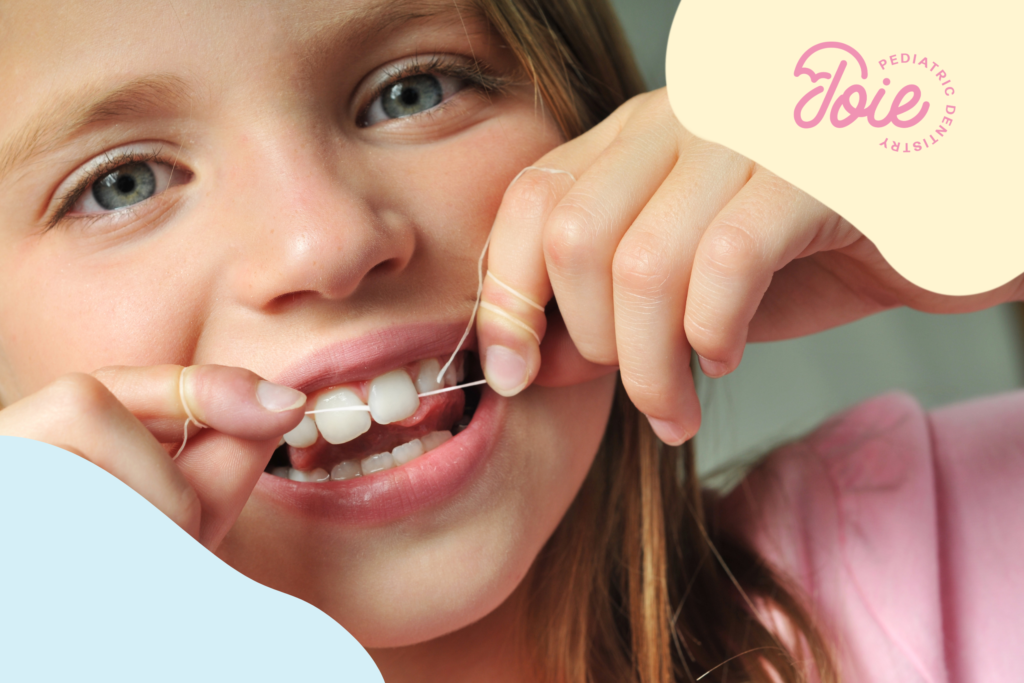
Position helps more than anything. Sit your child in your lap with their head tilted back against you, or stand behind them at the mirror, so you can see into the mouth and reach the back teeth. Floss picks made for kids are far easier to maneuver in a small mouth than a length of string wound around your fingers, and they free up your other hand to hold the cheek aside. Go gently: ease the floss between the teeth rather than snapping it down onto the gum, and curve it against the side of each tooth. If your child clamps down or pulls away, keep each session short and end calmly rather than forcing every tooth at once. Consistency over weeks matters more than one thorough night, and kids who see a parent floss are more likely to accept it as just part of the day.
What daily flossing prevents in baby teeth
It’s tempting to think baby teeth don’t warrant the effort because they fall out anyway, but cavities between baby teeth cause real problems while they’re there. Decay between the teeth is hard to spot at home and often isn’t visible until it’s advanced, which is one reason it tends to show up at a checkup before parents notice anything. A cavity that starts between two baby teeth can reach the nerve, cause pain and infection, and even affect the permanent tooth forming underneath. Daily flossing is the single home habit that protects those surfaces. It works alongside the fluoride and professional cleaning that come with cavity prevention care, and a first visit is a good time to have someone show you the technique on your own child’s mouth.
Let’s Make Your First Visit Easy
Whether you’re from Ramsey, Mahwah, Allendale, or anywhere in Bergen County, we’d love to welcome your family to ours.
SHOWTIMES (HOURS)
Monday: 9:00 AM – 5:00 PM
Tuesday: 9:00 AM – 5:00 PM
Wednesday: 9:00 AM – 5:00 PM
Thursday: 9:00 AM – 5:00 PM
Friday: 9:00 AM – 5:00 PM
Saturday: By appointment only
Sun: Closed