
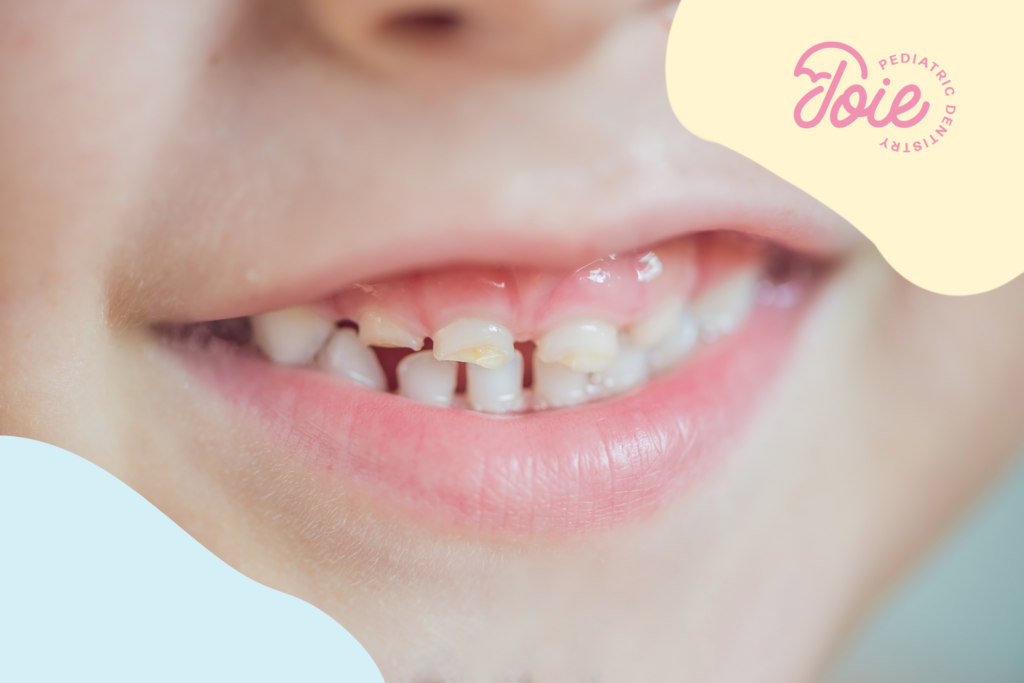
White Spots on Your Child’s Teeth: What They Mean
Chalky white spots on a child’s teeth have a few different causes, and they are not all equal. Some are the first visible signs of a cavity starting, which is the one you want to catch early. Others come from too much fluoride during the years the teeth were forming, or from enamel that did not develop fully. Telling them apart matters because the early-decay kind can often be reversed if it is caught in time. Here is what the spots mean and what each cause calls for.
Quick answer: White spots on a child’s teeth usually come from one of three things: early tooth decay (demineralization), mild fluorosis from too much fluoride while the teeth were forming, or weak enamel that did not develop fully. The decay type is the one to act on early, because at the white-spot stage, it can often be remineralized and stopped before it becomes a cavity. A dentist can tell the causes apart.
The kind that signals a cavity starting
The most important type to recognize is the white spot that marks the start of decay. When acid from plaque pulls minerals out of the enamel, the surface loses its glassy look and turns a dull, chalky white, often near the gumline or around the edges of the teeth. This is the visible beginning of the process that leads to a cavity, before any hole has formed.
The encouraging part is that this stage is not yet a cavity, and it can often be reversed. With better brushing, fluoride, and less frequent sugar, the enamel can take minerals back up and the spot can stop progressing. That window is the reason these spots are worth catching early, because once the surface breaks down into a true cavity, it no longer heals on its own.
Spots from too much fluoride
A second common cause is mild dental fluorosis. This happens when a child takes in more fluoride than needed while the permanent teeth are still forming under the gums, often from swallowing toothpaste or from combined sources over time. It shows up as faint white streaks or flecks, usually spread across several teeth in a fairly even pattern rather than concentrated in one spot.
Mild fluorosis is a cosmetic finding, not a sign of disease, and the teeth underneath are sound. It is also preventable, which is why pediatric dentists are specific about toothpaste amounts: a grain-of-rice smear under age three and a pea-sized amount after, with children encouraged to spit rather than swallow.
Spots from enamel that did not form fully
A third group of white spots comes from enamel that did not develop normally in the first place. Conditions grouped under terms like enamel hypoplasia and molar incisor hypomineralization leave patches of enamel that are thinner or less mineralized, and these can look white, creamy, or sometimes yellow-brown. A high fever, certain illnesses, or some medications during the years the teeth were forming can all interfere with that development.
These spots are present from the moment the tooth comes in, rather than appearing later, which is one clue to their origin. Because the affected enamel is weaker, those teeth can be more prone to decay and sensitivity, so they are worth keeping an eye on even when the concern starts as a cosmetic one.
How a dentist tells them apart
The cause is not always obvious from a glance, and the three types can look similar to a parent. A dentist sorts them out by looking at the pattern, where the spots sit, whether they appeared as the tooth erupted or developed afterward, and how the surface responds. A spot that came up recently near the gumline points one way; faint even mottling across many teeth points another.
That distinction drives what happens next, which is why it is better assessed than guessed. The same white spot can mean an early cavity worth treating now or a harmless cosmetic mark that needs nothing, and only an exam can settle which.
What you can do at home and when to come in
For everyday prevention, the basics carry most of the weight: brushing twice a day with the right amount of fluoride toothpaste, cleaning between the teeth as they close together, and keeping sugary drinks and frequent snacking down. These steps both prevent new demineralization spots and help reverse early ones.
Bring any new white spot up at a checkup, and sooner if it appeared quickly or your child has had frequent cavities. Catching the decay type early is exactly what our cavity prevention care is built to do, and a first visit is a good moment to have the spots identified and a plan set before anything progresses.
Let’s Make Your First Visit Easy
Whether you’re from Ramsey, Mahwah, Allendale, or anywhere in Bergen County, we’d love to welcome your family to ours.
SHOWTIMES (HOURS)
Monday: 9:00 AM – 5:00 PM
Tuesday: 9:00 AM – 5:00 PM
Wednesday: 9:00 AM – 5:00 PM
Thursday: 9:00 AM – 5:00 PM
Friday: 9:00 AM – 5:00 PM
Sat/Sun: Closed