Canker Sores in Children: Why They Happen and How to Help
A canker sore is small, but for a child it can make eating, drinking, and even talking miserable. These little ulcers inside the mouth are common in kids and almost always harmless, though that is little comfort when your child will not eat. They clear on their own within a week or two, and a few simple steps make the wait easier. Spotting them and ruling out anything more is something a dentist checks during a routine cleaning and exam. Here is what causes canker sores, how to ease them, and how to tell them apart from cold sores.
Quick answer: Canker sores are small, shallow ulcers inside the mouth, on the cheeks, tongue, or gums. They are common in children, harmless, and not contagious, and they usually heal on their own in one to two weeks. Triggers include minor mouth injuries, stress, certain foods, and nutritional gaps. They are different from cold sores, which appear on the lips and are caused by a virus. A dentist should see sores that are very large, last beyond two weeks, or keep coming back.
What a canker sore is
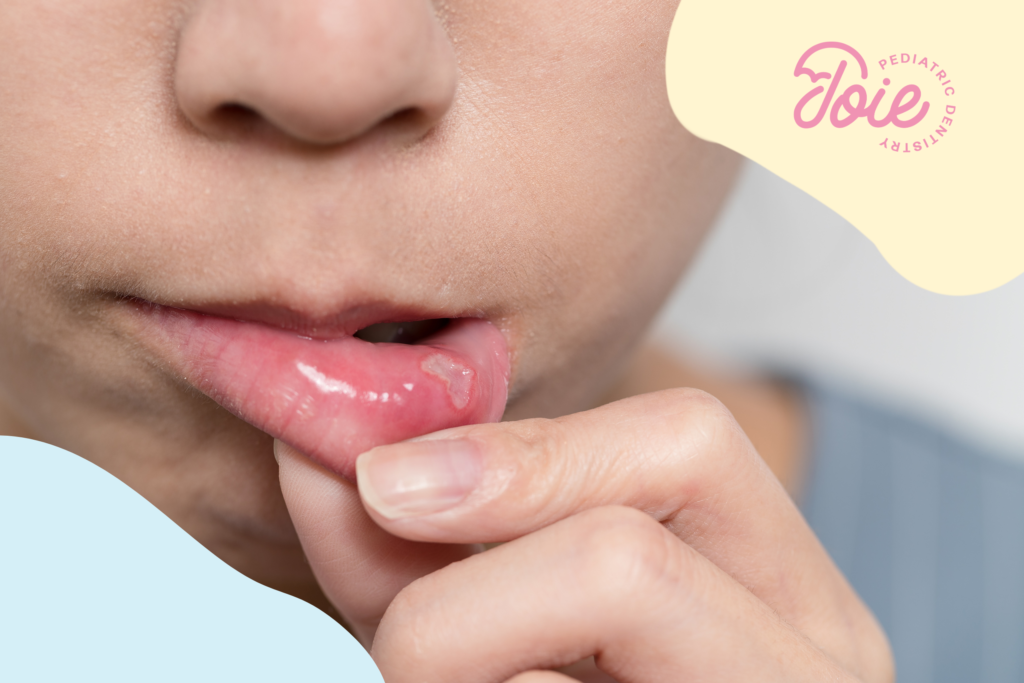
A canker sore, known medically as an aphthous ulcer, is a small, shallow sore that forms inside the mouth, on the soft tissue of the cheeks, the tongue, the inside of the lips, or the gums. It usually looks like a round or oval spot with a white or yellowish center and a red border. They are common in children and, as this overview of what canker sores are and why they form notes, they are harmless even though they can be quite painful.
Importantly, canker sores are not contagious. Your child cannot catch one from another child or pass it along, which sets them apart from cold sores. Most are small and heal on their own, though a child can have one at a time or occasionally a few at once.
Why children get them
There is rarely a single clear cause, and often you will not pin down exactly why one appeared. A common trigger is a minor injury inside the mouth: biting the cheek, a poke from a toothbrush, a sharp food, or irritation from braces. Stress and being run down play a part too, so sores sometimes show up around a big change, an illness, or a busy stretch.
Diet can contribute. Acidic and spicy foods irritate the mouth and can set off a sore, and some children react to specific foods. Gaps in certain nutrients, like iron, folate, or B vitamins, are linked to recurring sores. For most kids, though, the occasional canker sore is just one of those things, not a sign of any underlying problem.
How to ease the pain while it heals
Since canker sores heal on their own, the goal at home is comfort. Steering away from the foods that sting helps most: skip acidic things like citrus and tomato, salty and spicy foods, and anything crunchy and sharp while the sore is there. Cool, soft foods like yogurt, smoothies, and plain pasta are easier, and a cold drink or a popsicle can numb the area a little.
Gentle care around the sore matters too. A soft toothbrush and careful brushing avoid aggravating it. For an older child who can rinse and spit, a mild saltwater rinse can soothe and keep the area clean. Over-the-counter children’s products that coat or numb the sore can help for a bad one, and children’s pain relievers ease the discomfort, though it is worth checking with the dentist or pediatrician on what suits your child’s age.
Canker sores versus cold sores
Parents often mix these up, but they are different and the distinction matters. A canker sore is inside the mouth, on the soft tissues, and is not contagious. A cold sore, also called a fever blister, appears outside the mouth, usually on or around the lips, looks like a cluster of small blisters, and is caused by the herpes simplex virus, which makes it contagious.
The location is the quickest tell: inside the mouth points to a canker sore, on the lip edge points to a cold sore. The cause and the contagious part differ too. Knowing which one you are dealing with helps, because a cold sore can spread through close contact and sharing cups or utensils, while a canker sore cannot.
When to have a sore looked at
Most canker sores need nothing more than time and a little comfort care. A few situations are worth a dentist’s or doctor’s attention. A sore that is unusually large, one that lasts longer than about two weeks, or sores that keep coming back frequently all deserve a look. The same goes if your child has many at once, runs a fever, or seems unwell beyond the sore itself.
These checks are mostly about ruling things out and, for recurring sores, looking at whether a trigger like a nutritional gap is in play. In the large majority of cases, the answer is reassuring, but persistent or severe sores are the exception where a professional should weigh in.
Keeping an eye on it at routine visits
Canker sores come and go on their own, so they rarely need a special trip. They are, though, the sort of thing worth mentioning at a regular visit, especially if your child gets them often, since a dentist can check the mouth, rule out other causes, and talk through triggers. Our kids dental cleaning and exam includes looking over the soft tissues of the mouth along with the teeth, and a first visit is a good moment to raise recurring sores if they have been a pattern for your child.
Let’s Make Your First Visit Easy
Whether you’re from Ramsey, Mahwah, Allendale, or anywhere in Bergen County, we’d love to welcome your family to ours.
SHOWTIMES (HOURS)
Monday: 9:00 AM – 5:00 PM
Tuesday: 9:00 AM – 5:00 PM
Wednesday: 9:00 AM – 5:00 PM
Thursday: 9:00 AM – 5:00 PM
Friday: 9:00 AM – 5:00 PM
Sat/Sun: Closed