Cavities in Toddlers: Why They Happen So Young
Cavities show up in toddlers far earlier than most parents expect, sometimes within months of the first tooth, and the cause is rarely just candy. Thin enamel, the bacteria in a child’s mouth, and the way and how often a toddler eats and drinks all play a bigger part. Understanding what actually drives early decay is what makes it preventable, which is the whole aim of our cavity prevention care. Here is why toddler cavities happen so young and what sits behind them.
Quick answer: Toddlers get cavities young because their enamel is thinner than adult teeth, so acid breaks through faster. The bigger drivers are how often sugar reaches the teeth rather than how much, plus cavity-causing bacteria that can be passed from a parent’s mouth. Bottles at bedtime, frequent juice and snacks, and incomplete brushing all feed the process. Early childhood decay is common, but it is largely preventable.
Their enamel is thinner, so decay moves fast
Baby teeth are more than small adult teeth. Their enamel, the hard outer shell, is noticeably thinner, which means acid can pass through it and reach the sensitive inner tooth much faster than in a permanent tooth. A spot that looks minor can become a real cavity in months rather than years. This is part of why tooth decay can start as soon as the first tooth appears, and why it is treated as the most common chronic condition of early childhood.
The speed is the reason dentists push for early visits and do not wait for a child to complain of pain. By the time a toddler’s tooth actually hurts, the decay is usually well advanced. The thin enamel does not make decay inevitable, but it does mean the margin for catching it early is smaller than with adult teeth.
Frequency matters more than quantity
The most misunderstood part of toddler cavities is that it is not mainly about how much sugar a child eats, but how often it reaches the teeth. Every time sugar hits the mouth, the bacteria there produce acid for a stretch of time, and the teeth lose minerals during that window. A single treat eaten quickly is one acid attack. The same amount of sugar sipped or nibbled across the whole day is attack after attack, with no time for the teeth to recover.
This is why a sippy cup of juice carried around all morning, or constant grazing on crackers and snacks, does more damage than the sugar total would suggest. Sticky and starchy foods that linger on the teeth extend each attack. The fix is less about banning treats and more about clustering them and giving the mouth long stretches of recovery in between.
Bacteria a toddler is not born with
Babies are not born with the bacteria that cause cavities. Those bacteria, mainly a type called Streptococcus mutans, are passed to a child, most often from a parent or caregiver. Sharing spoons, tasting food off the same utensil, cleaning a pacifier in your own mouth, all of these can transfer bacteria from an adult’s mouth to a child’s.
The earlier and the heavier that colonization, the higher a toddler’s cavity risk later. This is also why a parent’s own oral health matters for the child: a caregiver with untreated decay carries more of these bacteria to pass along. It is not about blame, it is a piece of the picture that explains why some toddlers develop cavities despite a fairly careful diet.
Bottles, sippy cups, and bedtime
How a toddler drinks is one of the biggest single factors. Putting a child to bed with a bottle of milk, formula, or juice bathes the front teeth in sugar for hours while saliva flow, which normally washes the mouth, drops during sleep. The result is a recognizable pattern of decay on the upper front teeth, sometimes called baby bottle tooth decay.
Daytime sipping causes a slower version of the same thing. A sippy cup of anything other than water, used constantly, keeps the teeth under steady acid. Moving a toddler toward an open or straw cup, keeping bottles to mealtimes, and offering water rather than juice between meals all cut the exposure that drives early decay.
Brushing that misses the mark
Toddlers cannot clean their own teeth well, and brushing that misses spots leaves plaque exactly where decay starts. A quick swipe, or letting a two-year-old do it themselves, generally is not enough. The teeth need brushing twice a day with a smear of fluoride toothpaste, and for this age an adult needs to do it or finish the job.
Fluoride is part of why this matters: it helps the enamel resist acid and can rebuild early weak spots before they become cavities. Skipping it, or using too little, removes a layer of protection that thin toddler enamel needs. The areas most often missed, the gumline and the back teeth, are also where toddler cavities most often begin.
Why early visits change the odds
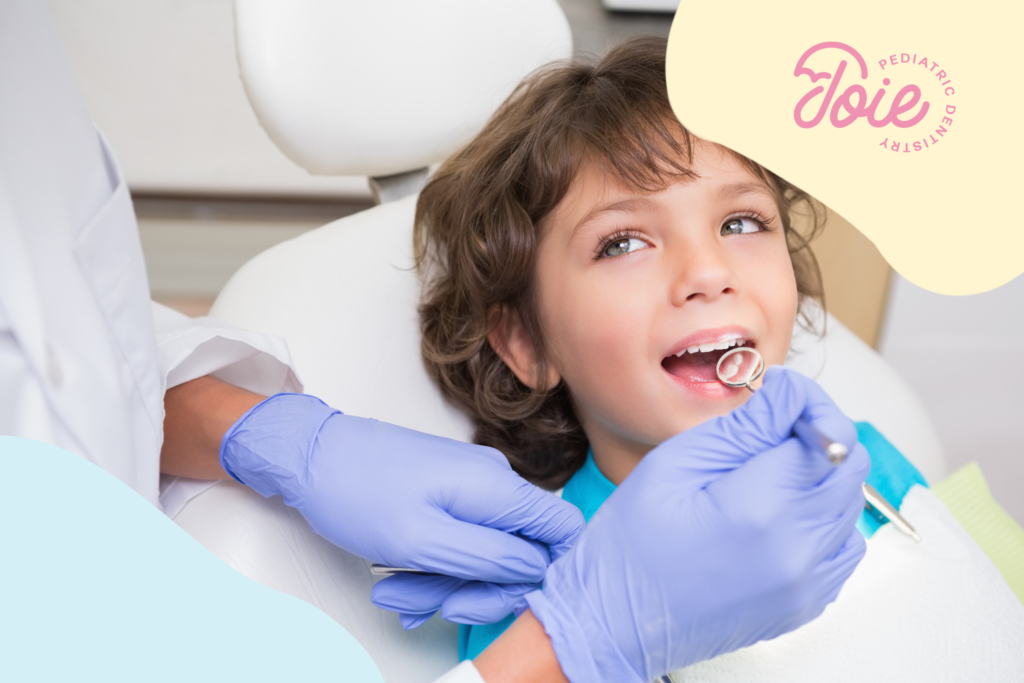
Because so much of toddler decay comes down to risk factors a parent cannot always see, the bacteria balance, the enamel, the eating pattern, an early dental visit does more than check for holes. A pediatric dentist can assess a toddler’s specific cavity risk, apply fluoride, and give you a feeding and brushing plan built around that child. Pediatric dentists recommend a first visit by age one, or within six months of the first tooth, precisely to start this before decay sets in. Our cavity prevention care is built around catching and heading off these risks, and a first visit is where that protection starts.
Let’s Make Your First Visit Easy
Whether you’re from Ramsey, Mahwah, Allendale, or anywhere in Bergen County, we’d love to welcome your family to ours.
SHOWTIMES (HOURS)
Monday: 9:00 AM – 5:00 PM
Tuesday: 9:00 AM – 5:00 PM
Wednesday: 9:00 AM – 5:00 PM
Thursday: 9:00 AM – 5:00 PM
Friday: 9:00 AM – 5:00 PM
Sat/Sun: Closed