
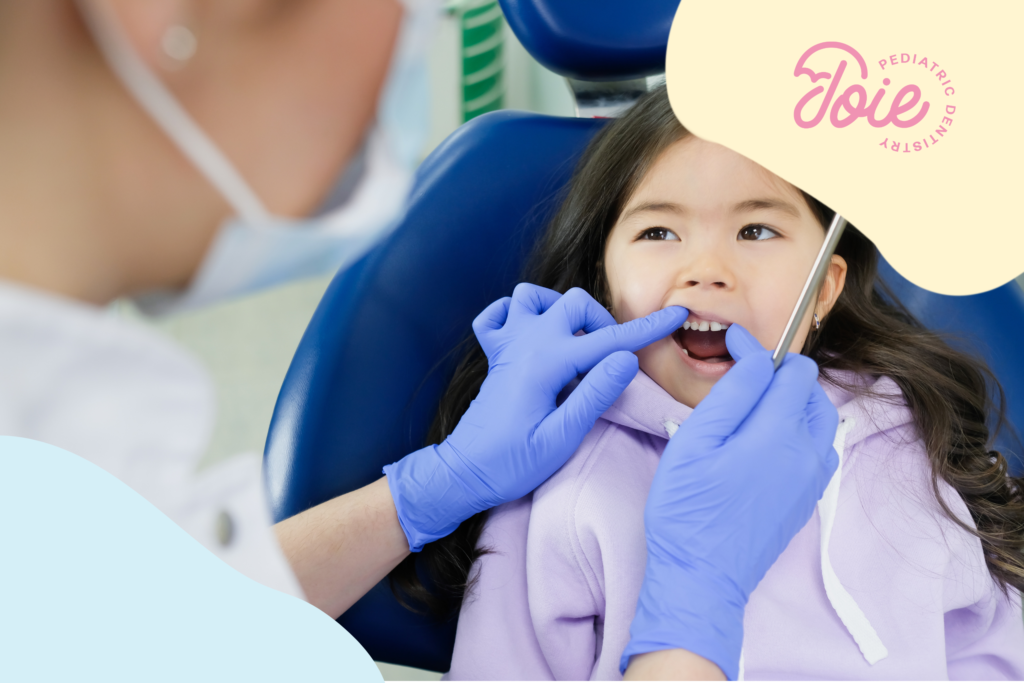
6 Year Molars and 12 Year Molars: What Parents Need to Know
Around age six, four new molars appear at the very back of your child’s mouth, behind all the baby teeth. No tooth falls out to make room, nothing wiggles, and there’s often no fanfare, which is why many parents never notice them arriving. These are the six-year molars, and they’re permanent teeth your child keeps for life. They’re also the teeth most likely to develop the first cavity, because they land in a mouth still brushed by a six-year-old. Here’s when the molars come in, why they’re at such high risk in their first years, and what protects them.
Quick answer: Six-year molars are the first permanent molars, and they come in behind the baby teeth around ages 5 to 7 without any tooth falling out first. Twelve-year molars, the second permanent molars, arrive around ages 11 to 13. Both have deep grooves and sit far back where children brush poorly, which makes them the most cavity-prone teeth in the mouth. Sealants applied soon after they erupt are the main way to protect them.
When Six-Year Molars Come In (and Why Parents Miss Them)
The first permanent molars usually erupt between ages five and seven, most often around six, which is where the name comes from. Four of them arrive, one in each corner, and they take their place behind the last baby molar rather than replacing anything. That single fact explains why they slip past most families: every other permanent tooth announces itself with a loose baby tooth, a gap, and a visit from the tooth fairy, while the six-year molars just quietly appear at the back. Plenty of parents assume for years that these are still baby teeth and will be replaced later. They won’t. Eruption takes several months from the first bump of enamel breaking the gum to a fully risen tooth, and during that stretch a flap of gum tissue often still partly covers the chewing surface, trapping food and making the tooth even harder to clean. The timing varies by a year in either direction, and that variation is normal.
Twelve-Year Molars: The Second Set of Permanent Molars
The second permanent molars arrive around ages eleven to thirteen, again behind everything else, again without replacing a baby tooth. They repeat the pattern of the six-year molars with one added difficulty: by then your child brushes unsupervised, and these teeth sit even farther back, at the point where most kids’ toothbrushes stop. Their grooves tend to be deep, and they erupt at an age when snacking, sports drinks, and independence all increase at once. Wisdom teeth, the third molars, come much later, usually between seventeen and twenty-one, and are a separate conversation. For a child, the two sets that matter are the six-year and twelve-year molars, and both deserve attention in the months right after they appear.
Why 6 Year Molars Get Cavities More Than Any Other Tooth
Three things stack against them. The chewing surface of a molar isn’t flat: it’s a landscape of pits and fissures, and on newly erupted molars those grooves are often narrower than a single toothbrush bristle, so brushing physically cannot reach the bottom of them while food and bacteria can. Position is the second problem, because these teeth sit at the very back of a small mouth, the hardest spot for a six-year-old to reach and the first place a distracted child stops brushing. Third, enamel keeps hardening for a couple of years after a tooth erupts, so a brand-new molar is at its most vulnerable exactly when it’s least likely to be cleaned well. Put together, the first permanent molars account for the large majority of cavities in school-age children, and a cavity here is a cavity in a tooth that has to last another seventy years. That’s the difference between decay in a baby molar and decay in one of these: there’s no replacement coming.
Signs Your Child’s Molars Are Coming In
Because nothing falls out, you have to look. Pull the cheek back gently with a clean finger while your child faces a light and check behind the last tooth in each corner, where you’ll see either a small ridge of enamel breaking the gum or a partly covered chewing surface. The symptoms that come with eruption look a lot like late teething: sore or swollen gum at the back, a child chewing on one side or complaining that food feels stuck back there, mild jaw ache, occasional headaches, and irritability around meals. Sometimes there’s a red, tender flap of gum over the erupting tooth that gets sore when food packs under it; warm salt water rinses help while the tooth finishes coming through. What isn’t normal is significant pain, swelling of the face, or fever, which points to infection rather than eruption and needs a same-day look.
How Dental Sealants Protect New Molars
A sealant is a thin resin coating flowed into the grooves of the chewing surface, where it hardens and turns a deep, brush-proof valley into a smooth surface. Applying one takes a few minutes per tooth, involves no drilling and no numbing, and is painless: the tooth is cleaned, a conditioning gel is applied and rinsed, the sealant is painted on, and a curing light sets it. Clinical guidance from the evidence review on pit-and-fissure sealants supports placing them on the molars of children and adolescents to prevent decay and even to stop very early lesions from progressing. Sealants generally last several years and often longer, and they’re checked at each routine visit and repaired when they chip or wear. Timing is what matters most: the protective value is highest when the sealant goes on soon after the molar has fully erupted, before the grooves have had a year or two of unsupervised brushing to accumulate damage. Our page on dental sealants for kids covers the procedure, how long they last, and how insurance usually handles them.
How to Care for New Molars at Home
Sealants cover the grooves, not the sides, so daily cleaning still does most of the work. Aim the toothbrush deliberately at the back teeth, angling it and going slowly across the chewing surface, and teach your child to reach behind the last tooth rather than stopping at the one they can see. Keep supervising or re-brushing until at least age eight, and pay particular attention during the months when a molar is erupting, since that’s when the gum flap traps food. Floss the new contact between the molar and the tooth in front of it, which is a common spot for cavities between teeth. Keep sugary drinks with meals rather than sipped through the day, since newly erupted enamel handles acid attacks poorly. If your child plays a contact sport, a mouthguard protects these teeth too.
How We Protect Molars at Our North Bergen DEntal Clinic
We watch for the six-year molars starting around age five, at each checkup, so we can seal them as soon as they’ve erupted enough to bond a sealant properly, and we repeat the process for the twelve-year molars. At the same visits, we check existing sealants for wear, look at how well your child is reaching the back teeth, and take X-rays when the molars have grown in tight against their neighbors, since decay between those teeth doesn’t show from the outside. That routine is part of our kids dental cleanings and exams. If your child is around five or six and hasn’t been checked recently, this is the appointment worth booking now: sealing a molar in the months after it erupts is the cheapest, easiest protection in pediatric dentistry, and it gets harder once decay has started. Call us at (201) 500-6314 or book through our Ramsey office and we’ll take a look at what’s coming in.
Let’s Make Your First Visit Easy
Whether you’re from Ramsey, Mahwah, Allendale, or anywhere in Bergen County, we’d love to welcome your family to ours.
SHOWTIMES (HOURS)
Monday: 9:00 AM – 5:00 PM
Tuesday: 9:00 AM – 5:00 PM
Wednesday: 9:00 AM – 5:00 PM
Thursday: 9:00 AM – 5:00 PM
Friday: 9:00 AM – 5:00 PM
Sat/Sun: Closed