Shark Teeth: When a Permanent Tooth Comes In Behind a Baby Tooth
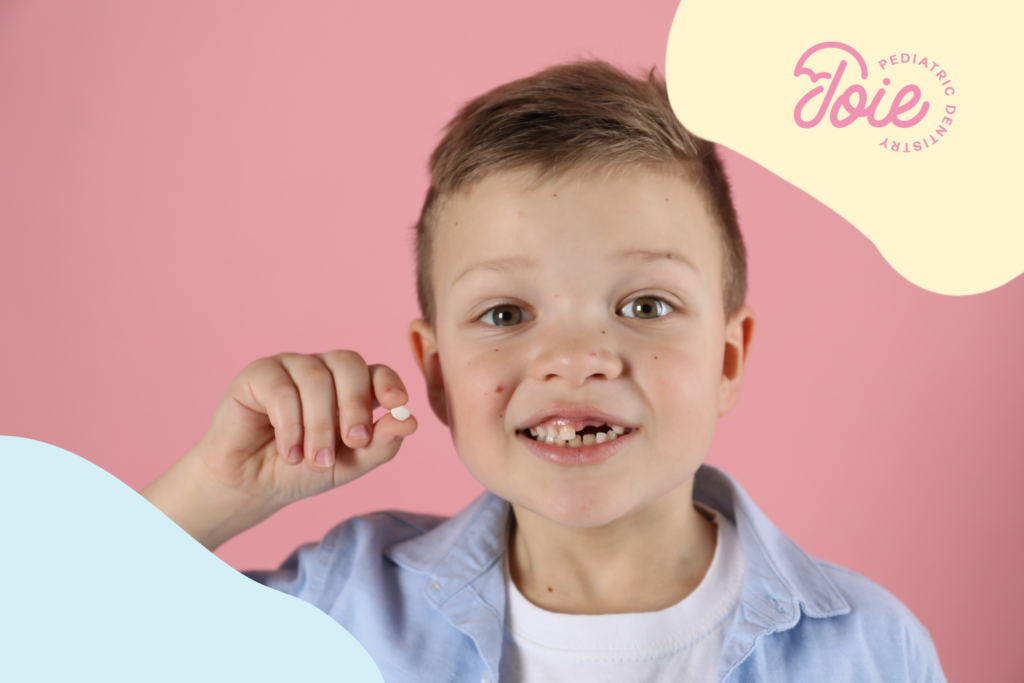
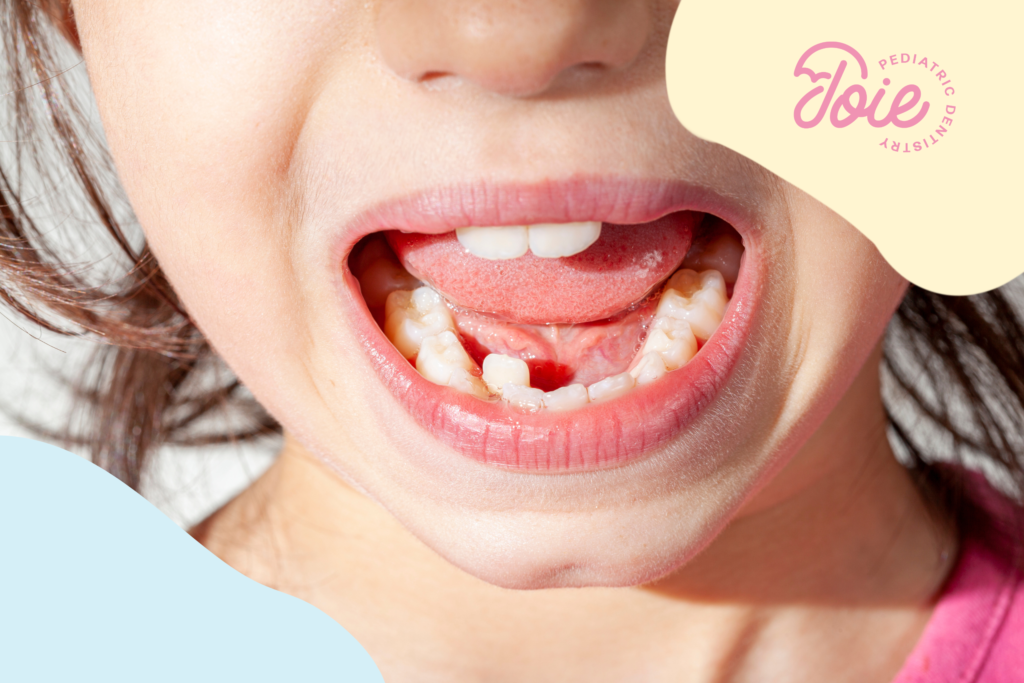
Your child opens wide and there it is: a second row of teeth, an adult tooth coming in behind a baby tooth that has not budged. It looks like a shark’s mouth, which is where the nickname comes from, and it tends to alarm parents more than it should. In most children this sorts itself out. Knowing when to wait and when a baby tooth needs help is the useful part, and it is the sort of thing our restorative care for kids keeps an eye on as a child’s teeth change over. Here is why shark teeth happen, what to do at home, and when to bring your child in.
Quick answer: Shark teeth happen when a permanent tooth comes in behind a baby tooth that has not fallen out yet, creating a double row. It is common between ages 5 and 7, usually in the lower front teeth, and it is rarely a problem. Most cases resolve on their own as the baby tooth loosens and falls out, helped by gentle wiggling. If the baby tooth stays firm after a few weeks, a dentist may remove it to let the permanent tooth move into place.
Why a second row of teeth appears
Normally, a permanent tooth develops right under its baby tooth. As the adult tooth moves up, it presses on the root of the baby tooth, the root dissolves, and the baby tooth loosens and falls out, leaving the spot open for the permanent tooth to take. Shark teeth happen when that handoff does not go to plan.
Sometimes the permanent tooth comes up slightly behind the baby tooth rather than directly under it, so it never puts enough pressure on the root to dissolve it. The baby tooth stays firmly in place, and the adult tooth erupts behind it, giving you two visible rows. Dentists sometimes call this an ectopic eruption. It can also happen when the baby tooth’s root is slow to dissolve, or when there is not quite enough room in the jaw, which nudges the adult tooth onto a different path.
How common it is and where it shows up
Shark teeth are far more common than most parents expect, and they are a normal variation in how teeth come in, not a sign that something is wrong. They show up most often between the ages of five and seven, the years when the first baby teeth give way to permanent ones. The lower front teeth are the usual spot, though it can happen with the upper front teeth too.
A family pattern is common, so if a parent had shark teeth as a child, the odds go up. Some children get them only once during the whole transition from baby to adult teeth, while others see it happen more than once as different teeth come in. Front teeth often act in pairs, so if one comes in behind its baby tooth, its match on the other side may well do the same.
What usually happens on its own
The encouraging news is that most shark teeth resolve without any treatment. In many cases the baby tooth was already on its way out, and within a few weeks it loosens and falls, and the permanent tooth drifts forward into the proper spot. The tongue actually helps nudge the adult tooth into place over time. The same eruption pattern that governs how children’s teeth develop and change over tends to correct the double row on its own.
The most useful thing you can do is encourage your child to wiggle a loose baby tooth gently, several times a day, with a clean finger or their tongue. The more it moves, the faster the root finishes dissolving and the tooth comes out. Normal eating, brushing, and flossing all help. What you want to avoid is forcing or yanking a tooth that is not ready, which can hurt and can damage the gum.
When the baby tooth needs help coming out
The waiting approach has limits. If the baby tooth is still firm after a few weeks and shows no sign of loosening, or if the permanent tooth behind it has erupted fully while the baby tooth holds its ground, it is time to have a dentist look. The same goes if the permanent tooth is starting to come in clearly crooked, or if there is pain, difficulty biting, or irritation of the gum or tongue.
In those cases, a dentist may recommend removing the baby tooth to clear the path. This is a straightforward procedure: baby tooth roots are much shorter and smaller than adult roots, so the area is numbed and the tooth comes out easily, often more quickly than parents expect. Once the baby tooth is gone, the permanent tooth usually moves forward into position over the following weeks.
Whether it leads to crooked teeth or braces
Parents often worry that shark teeth mean orthodontic trouble ahead. Usually they do not. Once the baby tooth is out of the way, the permanent tooth tends to settle into the right place on its own, and no lasting problem remains. Shark teeth in the front teeth in particular rarely cause alignment issues.
There are exceptions worth watching. If several teeth come in as double rows, if the issue involves the back molars, or if there is clear crowding because the jaw is short on space, a dentist may want to monitor alignment and, in some cases, suggest an orthodontic evaluation. Early orthodontic screening is generally recommended around age seven, which lines up well with when shark teeth tend to appear, so it is a natural time to check.
When to bring your child in
A single loose baby tooth with an adult tooth peeking in behind it is usually fine to watch for a few weeks while your child wiggles it. Bring your child in if the baby tooth stays solid, if the permanent tooth is fully in behind it, if there is pain or crowding, or if more than one or two teeth are doubling up. A dentist will check the bite, see how much room the jaw has, and may take an X-ray to see how the teeth are positioned before deciding whether to remove the baby tooth or let it ride. Our restorative care for kids covers simple baby-tooth removal when it is needed, and a first visit sets up the regular monitoring that catches eruption issues like this early.
Let’s Make Your First Visit Easy
Whether you’re from Ramsey, Mahwah, Allendale, or anywhere in Bergen County, we’d love to welcome your family to ours.
SHOWTIMES (HOURS)
Monday: 9:00 AM – 5:00 PM
Tuesday: 9:00 AM – 5:00 PM
Wednesday: 9:00 AM – 5:00 PM
Thursday: 9:00 AM – 5:00 PM
Friday: 9:00 AM – 5:00 PM
Sat/Sun: Closed