When a Baby Tooth Has to Come Out: What to Expect
Hearing that your child needs a tooth removed can sound worse than it is. Baby teeth are meant to fall out on their own, but sometimes decay, injury, or crowding makes it better to take one out early. The visit is usually quick and far gentler than most parents picture, because baby teeth have short roots and come out easily. When an extraction is the right call, it is part of the broader gentle tooth removal we approach with a child’s comfort in mind. Here is why a baby tooth might need to come out, what happens at the appointment, and how to help your child heal afterward.
Quick answer: A baby tooth may need to be removed when decay is too far gone for a filling or crown, after an injury, or when it is blocking a permanent tooth. The procedure is quick: the area is numbed, and because baby tooth roots are short, the tooth comes out easily. Recovery usually takes a few days, helped by soft foods, rest, and avoiding straws. If a back tooth is lost early, a space maintainer may hold the gap.
Why a baby tooth sometimes has to be removed
Pediatric dentists work to save teeth whenever they can, so an extraction is a last resort rather than a first move. It becomes the better option in a few situations. The most common is decay that has gone too far for a filling or even a crown to fix, where leaving the tooth would risk pain and infection. This kind of decision sits within standard guidance on restoring and managing damaged baby teeth, which weighs saving a tooth against removing it.
Other reasons come up too. A tooth badly broken by a fall or injury may not be fixable. A baby tooth that has overstayed its welcome and is blocking the permanent tooth behind it sometimes needs to go, as can happen with shark teeth. And occasionally a crowded mouth calls for removing a tooth to make room. In each case the goal is the same: protect the child’s comfort and the healthy development of the permanent teeth.
Why leaving a problem tooth is not the safer choice
It is fair to ask why a tooth that will fall out anyway needs removing rather than just waiting. The answer is that a decayed or infected baby tooth does not simply wait quietly. Decay keeps spreading, and an infection in a baby tooth can reach the permanent tooth developing right beneath it, sometimes leaving a lasting mark. Pain, abscesses, and trouble eating and sleeping follow an untreated tooth.
Removing the problem tooth, when that is the recommendation, heads off that chain of trouble. It is almost always less disruptive for a child than letting decay or infection run its course. The trade-off, the early gap, is something a dentist can manage, which is a smaller problem than the one being solved.
What the appointment is actually like
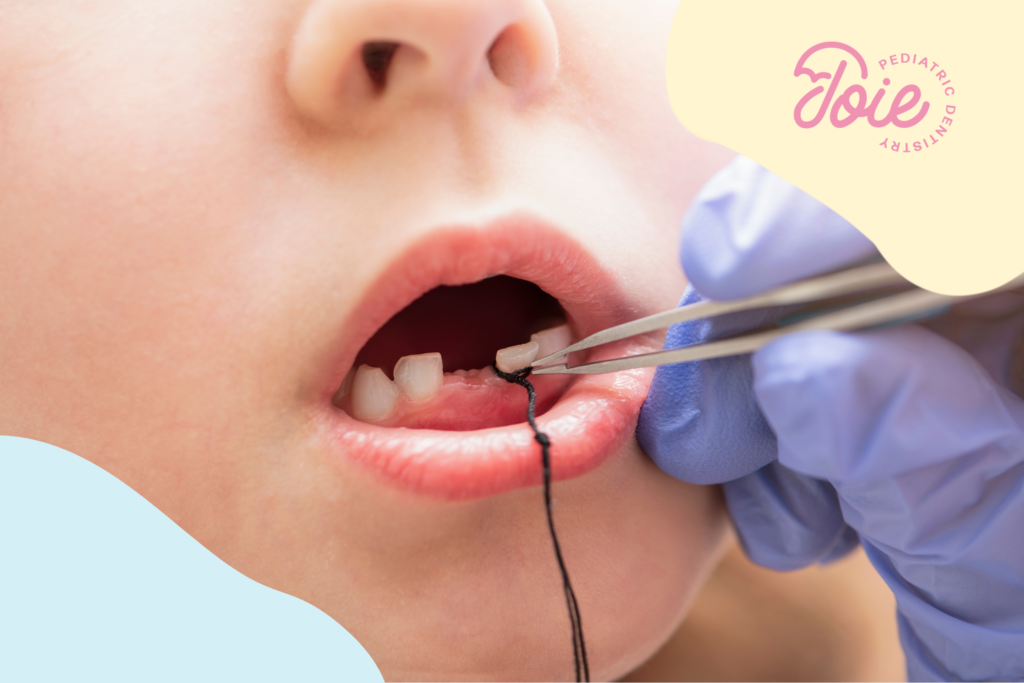
The visit is more straightforward than the word extraction suggests. The dentist first numbs the area thoroughly so your child does not feel pain during the removal, just some pressure. For a child who is anxious, or for a more involved removal, options like laughing gas can make the visit easier and calmer.
Because baby teeth have short, small roots, especially the front ones with a single root, they tend to come out quickly once the area is numb. Your child may feel a bit of pushing and wiggling, and then it is done. The dentist places a piece of gauze over the spot for your child to bite on gently, which helps a clot form and stops the bleeding. Using simple, calm language at home beforehand, talking about the dentist helping the tooth come out rather than pulling or yanking, makes the whole thing feel less scary.
Helping your child heal at home
Recovery from a baby tooth extraction is usually quick and uncomplicated, often settling within a few days. For the first stretch, having your child bite gently on the gauze for about thirty minutes helps the bleeding stop, and a little oozing afterward is normal. A cold compress against the cheek, on for a bit and off for a bit, eases any swelling.
Soft, cool foods are the way to go for the first day, things like yogurt, applesauce, and mashed potatoes, with a return to normal eating over the next few days. The main thing to avoid is anything that could dislodge the clot: no drinking through straws, no forceful spitting, and no poking at the site. Children’s acetaminophen or ibuprofen handles any soreness. Keep brushing the rest of the teeth, just gently around the healing spot.
Holding the space after a back tooth comes out
When the tooth removed is a back molar lost well before its natural time, the gap matters. Baby molars hold space for the permanent teeth coming in behind them, and if that space is left open, the neighboring teeth can drift into it, crowding or blocking the permanent tooth and setting up alignment problems later.
To prevent that, a dentist may fit a space maintainer, a small device that holds the gap open until the permanent tooth is ready to erupt. Not every extraction needs one; a front tooth, or a back tooth close to falling out on its own, often does not. When a space maintainer is the right call, it is a simple, effective way to keep the development on track.
When to call after an extraction
Most children bounce back within a few days, but a few signs are worth a call: bleeding that does not slow with fresh gauze and gentle pressure, pain that gets worse rather than better after the first day or two, a fever, or swelling that increases instead of easing. These are uncommon, especially with baby teeth, but they are the moments to check in rather than wait. Our gentle tooth removal page explains how we keep extractions calm and comfortable for children, and a first visit is the right time to ask about a tooth that has been worrying you before it reaches the point of needing removal.
Let’s Make Your First Visit Easy
Whether you’re from Ramsey, Mahwah, Allendale, or anywhere in Bergen County, we’d love to welcome your family to ours.
SHOWTIMES (HOURS)
Monday: 9:00 AM – 5:00 PM
Tuesday: 9:00 AM – 5:00 PM
Wednesday: 9:00 AM – 5:00 PM
Thursday: 9:00 AM – 5:00 PM
Friday: 9:00 AM – 5:00 PM
Sat/Sun: Closed