Why a Bottle at Bedtime Can Harm Your Baby’s Teeth
A bottle of milk at bedtime is the most common cause of tooth decay in babies and toddlers. The drink itself isn’t unusual; the problem is how long it sits on the teeth once your child falls asleep. Dentists call the result baby bottle tooth decay, and it shows up first as faint white marks on the upper front teeth. It’s also highly preventable once you understand the mechanism. Here’s why nighttime is the danger zone and how to get ahead of it.
Quick answer: Bedtime bottle tooth decay happens when milk, formula, or juice pools around a sleeping child’s teeth and feeds acid-producing bacteria for hours. It shows up first as white spots on the upper front teeth. The fix is straightforward: never put your child to bed with anything but water, clean the teeth before sleep, and book a first dental visit by age one.
Why the bottle at night is the real problem
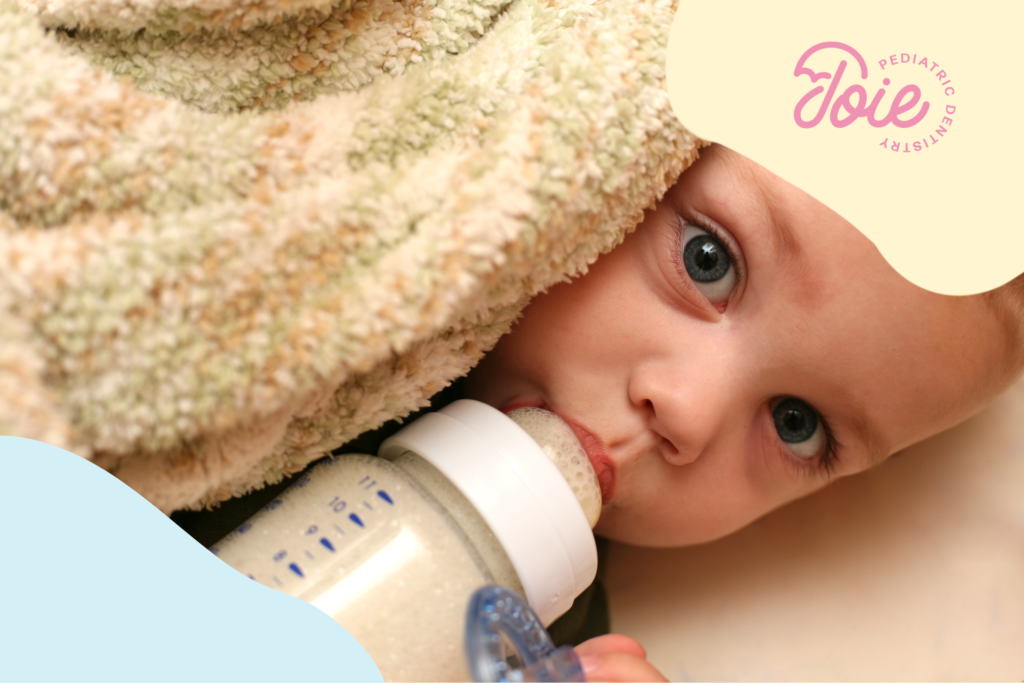
It isn’t that milk or formula is bad for teeth. The issue is contact time. During the day, your child eats, moves, and produces plenty of saliva, so the natural sugars in milk get cleared away fairly quickly. At night, the mouth’s main defense shuts down: saliva flow, which rinses away sugar and neutralizes acid, drops to almost nothing during sleep. If your child drifts off with a bottle, the liquid pools around the upper front teeth for hours, giving the bacteria in plaque a steady supply of sugar to turn into acid. The same applies to breastfeeding to sleep: if a baby falls asleep nursing, breast milk can sit on the teeth overnight the same way. The damage isn’t from one night. It builds quietly over weeks and months, which is why it often isn’t caught until it’s advanced.
What it looks like, and where to check
Baby bottle tooth decay follows a predictable pattern, and knowing where to look lets you catch it at the reversible stage. The first sign is a dull, chalky white spot or band along the gumline of the upper front teeth, the teeth that sit right behind the bottle’s flow. These white spots are easy to miss unless you lift your child’s lip and look directly at the gumline in good light. If the decay progresses, the white turns yellow, then brown, and eventually the surface breaks down into a visible cavity or chips away. Baby teeth decay faster than adult teeth because their enamel is thinner, so what starts as a faint mark can become a real cavity within months. Lifting the lip to check the upper front teeth once a week takes a few seconds and is the single most useful habit for catching this early.
How decay-causing bacteria reach your baby in the first place
Babies aren’t born with the bacteria that cause tooth decay. Those bacteria are passed to them, usually from a parent or caregiver, through shared saliva. Tasting food off your child’s spoon, cleaning a dropped pacifier in your own mouth, or sharing a cup can all transfer cavity-causing bacteria to a baby’s mouth, sometimes before any teeth appear. The earlier a child picks them up, the higher their decay risk from then on. This is extremely common and not a sign you’ve done anything wrong, but small changes help: keep spoons and pacifiers out of your own mouth, and keep your own dental health in good shape, which lowers the bacterial load you might pass on.
Making the switch off the bedtime bottle
The goal is simple to state and harder to do: nothing but water in the bottle once your child is in bed. If the bottle is part of the bedtime routine, you don’t have to drop it overnight. Move the milk feed earlier, before tooth-brushing, so the teeth get cleaned after the last milk of the day. Then, if your child still wants a bottle to settle, fill it with plain water. For a child attached to the sweetness, water it down gradually over a week or two until it’s just water. Clean the teeth before bed every night: a soft brush with a rice-grain smear of fluoride toothpaste once teeth are in, or a damp cloth wiped over the gums before that. The guidance on bottles and tooth decay also flags daytime grazing on a bottle or sippy cup of juice as the same problem in slower motion, so keep sugary drinks to mealtimes and offer water in between.
When to bring your baby in
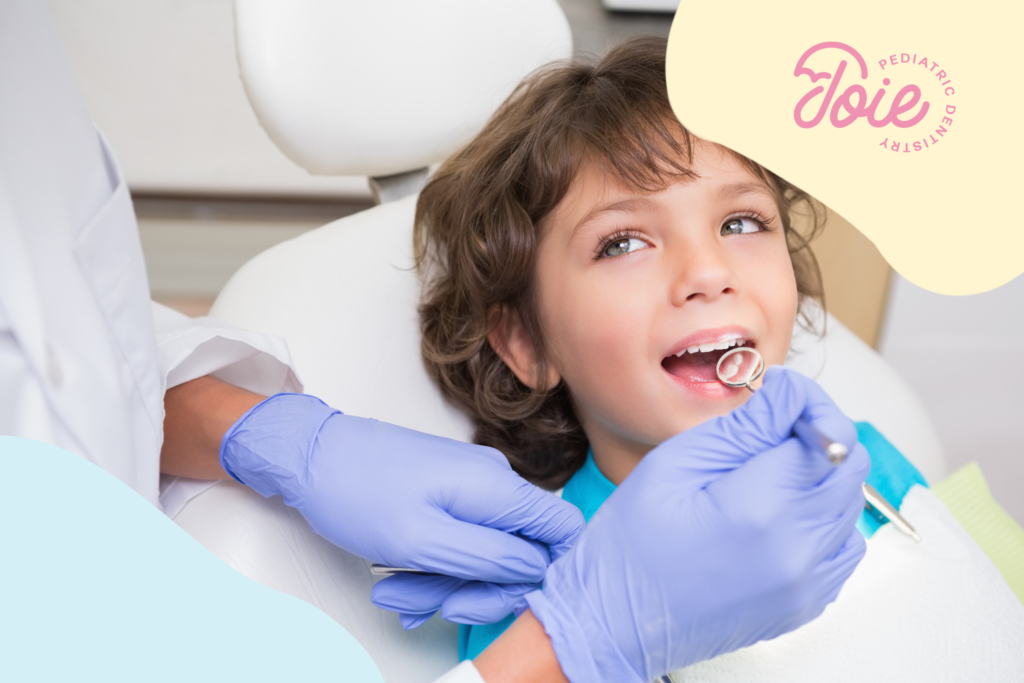
The first dental visit should happen by your child’s first birthday, or within six months of the first tooth appearing. That early visit is built around exactly this problem: we check the upper front teeth for the first signs of decay, talk through feeding and bottle habits, and apply fluoride varnish if there’s any sign of weakened enamel. If you’ve already spotted white spots, don’t wait for the regular schedule, because at that stage decay can still be stopped with fluoride and a change in habits before it ever becomes a cavity. Our cavity prevention care covers fluoride varnish, feeding guidance, and early monitoring, and the first visit is the right place to build a plan before any damage starts.
Let’s Make Your First Visit Easy
Whether you’re from Ramsey, Mahwah, Allendale, or anywhere in Bergen County, we’d love to welcome your family to ours.
SHOWTIMES (HOURS)
Monday: 9:00 AM – 5:00 PM
Tuesday: 9:00 AM – 5:00 PM
Wednesday: 9:00 AM – 5:00 PM
Thursday: 9:00 AM – 5:00 PM
Friday: 9:00 AM – 5:00 PM
Sat/Sun: Closed