
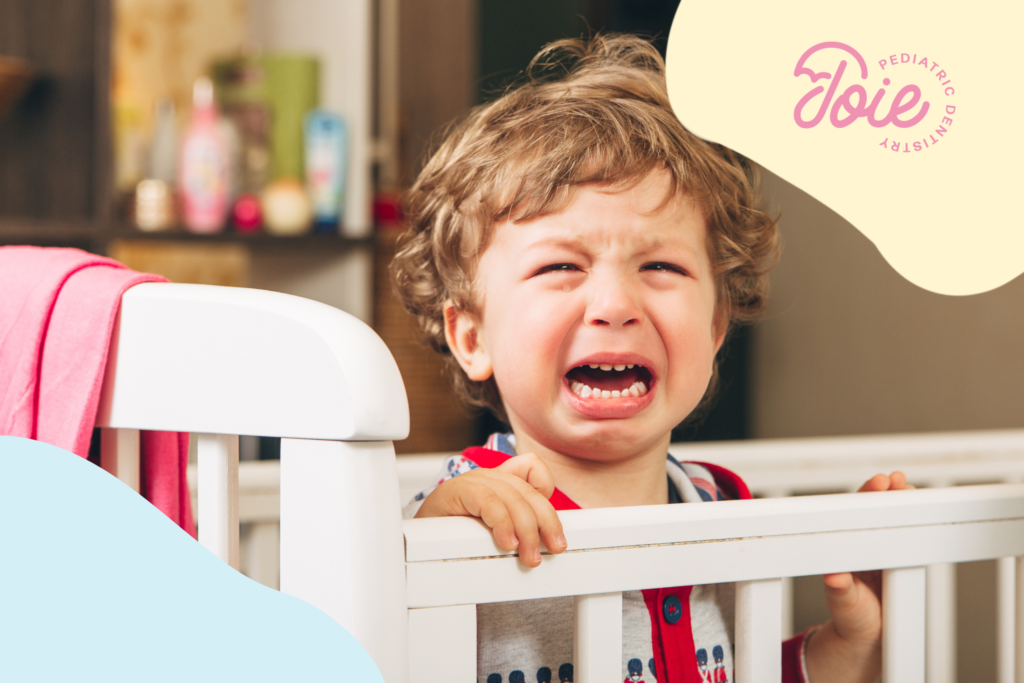
Signs Your Toddler’s 2 Year Molars Are Coming In and What Helps
Second molars, known as 2 year molars, are the last of the twenty baby teeth to come in, and the hardest. They typically arrive between 23 and 33 months, after the front teeth and first molars are already in place, and their size and position make them the most uncomfortable set for most toddlers to cut. Some children show almost no signs; others go through a rough stretch that looks like teething all over again. We check the second molars at every kids dental cleaning and exam, so what follows is what to expect at home: how to recognize them, how long the discomfort lasts, what helps, and when to have a look.
Quick answer: 2 year molars are the last baby teeth to erupt, usually between 23 and 33 months. They are the most uncomfortable set for most toddlers because of their size and position, and most of the fussiness clusters in the days right around when each tooth breaks through, not for weeks beforehand. Cold, gentle pressure, and weight-dosed pain relief cover most of it.
What 2 year molars and signs they are coming in
The second molars are the last four teeth in the primary set, one in each back corner of the upper and lower jaw, directly behind the first molars. There is no gap ahead of them the way there is further forward, so a second molar erupting has less room to work with and more gum to push through, part of why the process is more noticeable than earlier teeth. Once all four are in, a toddler has the complete set of twenty baby teeth. For the full eruption order and timing of every tooth, our baby teeth chart lays out the whole sequence from six months through age three.
The symptoms overlap with earlier teething, but a few show up more often because the teeth are larger and further back. The table below separates what is typically part of the process from what points to something else.
| Sign | Usually the molars | Points to something else |
| Drooling more than usual | Yes | |
| Chewing on fingers, toys, or clothing | Yes | |
| Rubbing the ear or cheek on one side | Yes, nerves in the area overlap | Constant ear-pulling with no chewing can mean an ear infection |
| Swollen or reddened gum at the very back | Yes | |
| Restless naps or nighttime waking | Yes, especially the night before a tooth breaks through | |
| Lower appetite for a few days | Yes | Appetite loss lasting more than a week |
| Temperature under 100.4°F (38°C) | Yes, a mild rise is common | A reading at or above 100.4°F (38°C) |
| Diarrhea or vomiting | No | A stomach illness, not teething |
| Rash spreading past the chin and cheeks | No, drool rash stays local | A body-wide rash |
A meta-analysis of sixteen studies on primary tooth eruption found the same handful of signs turning up again and again across children, with gum irritation, fussiness, and drooling the most consistent, and no reliable link to true fever or stomach symptoms. That matches what we see in the office: the closer a symptom sits to the mouth, the more likely it is the tooth.
How long the discomfort lasts
Second molars do not erupt all at once. The four teeth can spread out over several months, one side sometimes weeks ahead of the other, so the discomfort can feel like it never fully ends even though any single tooth is not bothering your child for that whole stretch. Most of the fussiness clusters in the days right around when a tooth breaks the gum line, not for weeks beforehand. A toddler struggling continuously for more than two weeks with no letup and no tooth visible yet is worth having looked at rather than waited out.
What can you do to relieve the pain:
Cold works better than almost anything else. A clean, damp washcloth chilled in the freezer for twenty minutes, a firm rubber teething ring, or a cold, not frozen, spoon pressed gently against the back gum all numb the area enough to take the edge off. Firm counter-pressure helps too: rubbing the gum with a clean finger, or a cold cucumber spear for a toddler already eating solids. For pain that does not settle with cold and pressure, acetaminophen or ibuprofen dosed by weight, not age, and confirmed with your pediatrician, is appropriate.
Skip benzocaine gels. The FDA has warned against these products in children under two because of a rare but serious blood condition they can cause, and topical numbing washes out of a toddler’s mouth within minutes anyway. Amber teething necklaces are a strangulation and choking risk with no evidence behind them either.
Molars still coming in at three
Some toddlers do not finish this set until close to their third birthday, still within the normal window. A 3 year old still cutting 2 year molars is not behind; it is the later end of a range that already spans ten months. What matters more than the exact age is whether all four eventually come in and the gums look healthy once they do. The next teeth are not due until age six, when the first permanent molars arrive behind the baby teeth without replacing anything, a timeline covered in our six year molars guide.
Cleaning around new molars
Second molars sit furthest back and have deep grooves on the chewing surface, harder to clean than the smoother teeth toward the front, and they arrive right around the age many toddlers start resisting the toothbrush. That combination is part of why cavities in toddlers often start on the back molars first. A soft, small-headed brush angled behind the last tooth, twice a day, with a rice-grain amount of fluoride toothpaste for a child under three, covers it. A white or discolored spot on a new molar is worth a look rather than a wait.
Frequently Asked Questions
When to have new molars checked?
Mild fussiness and drooling for a few days do not need a visit. A temperature at or above 100.4°F (38°C), diarrhea, or a rash beyond the chin point to an illness rather than teething and are worth a call to your pediatrician. A bluish, fluid-filled bump where a molar is about to erupt looks alarming but is usually harmless, though worth confirming. If your child is close to three with no second molar yet, or one side is erupting months ahead of the other, bring it up at your next cleaning. If your toddler has not had a first visit yet, this is as good a reason as any to get one on the calendar.
Can 2 year molars cause a fever?
Teething, including second molars, can raise body temperature slightly, but it does not cause a true fever. A reading at or above 100.4°F (38°C) points to an illness happening at the same time, not the tooth, and is worth a call to your pediatrician.
Do 2 year molars fall out?
Yes. Like all baby teeth, second molars are eventually shed, typically between ages 10 and 12, making room for the permanent premolars underneath. They are not replaced by the six year molars, which come in separately, further back, with nothing falling out first.
Can 2 year molars come in before 18 months?
It is on the early side but not unheard of. The window we quote, 23 to 33 months, reflects when most children get theirs, and variation of a few months is normal. A second molar at 18 months is usually just early, especially if earlier teeth also arrived ahead of schedule. If you are not sure what you are seeing is a second molar, it is worth confirming at a visit rather than guessing from home.
Why are 2 year molars harder than other teeth?
They are the largest baby teeth, they sit furthest back where there is less room, and by the time they erupt your toddler is old enough to feel and react to the discomfort in a way an eight-month-old cutting a front tooth is not. Size, position, and awareness stack together, which is why this round of teething tends to be the most noticed, even though it is not necessarily more painful tooth for tooth than earlier ones.
We check second molars, along with everything else, at every routine cleaning and exam. If your toddler is having a rough stretch or you would like another set of eyes on what is coming in, call us at (201) 500-6314 or book online.
Let’s Make Your First Visit Easy
Whether you’re from Ramsey, Mahwah, Allendale, or anywhere in Bergen County, we’d love to welcome your family to ours.
SHOWTIMES (HOURS)
Monday: 9:00 AM – 5:00 PM
Tuesday: 9:00 AM – 5:00 PM
Wednesday: 9:00 AM – 5:00 PM
Thursday: 9:00 AM – 5:00 PM
Friday: 9:00 AM – 5:00 PM
Sat/Sun: Closed